
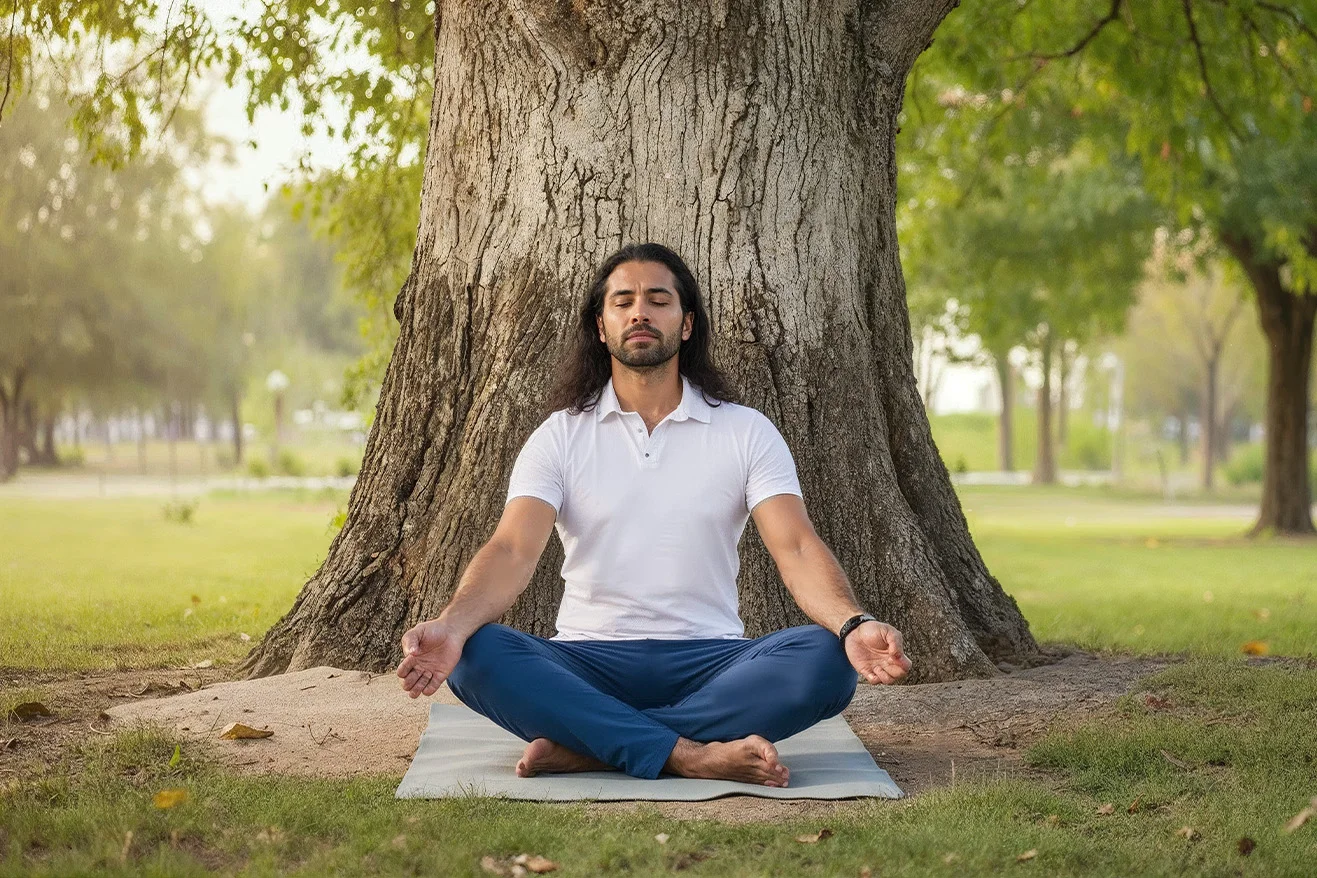
As the New Year approaches, we participate in the Great Resolution Ritual. We look in the mirror, see everything we want to change, and declare, “This year, I will finally stop X and start Y.” We join the gym, we buy the books, and by mid-February, those well-meaning promises have often faded into a distant, slightly guilt-inducing memory.
If you, too, find yourself stuck in this endless loop every year promising to improve, it’s time to trade in the New Year’s Resolution for a Sankalpa, the yogic method of setting intention. While a resolution is often a desperate sprint towards fixing a perceived flaw, a Sankalpa is a steady, powerful, and gentle affirmation of the change that is already happening within you.
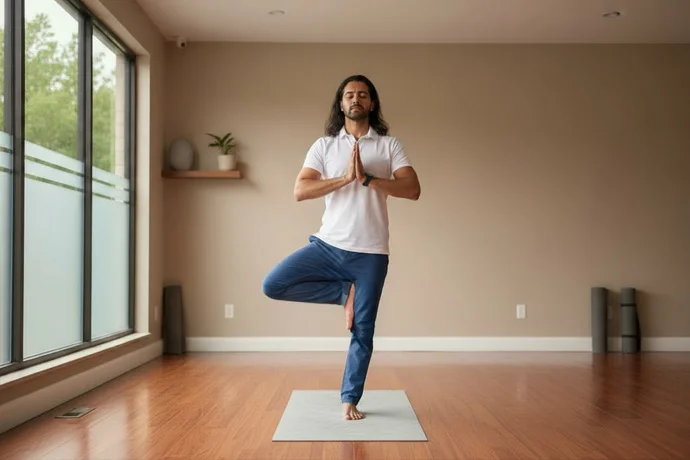
The Problem with the Promise
Why do resolutions so often fail? It usually comes down to two key issues:
1. The Language of Lack
Resolutions are typically framed in the negative. “I will stop eating junk food.” “I need to lose 10 pounds.” “I must be less lazy.” This language reinforces the idea that you are currently lacking something, which creates a negative emotional charge. When we try to achieve a goal from a place of self-criticism, we drain our motivation and make the process feel like a punishment.
2. The Focus on the Future
A resolution is a contract with your future self. You tell yourself, “I will be happy/healthy/successful when I achieve this goal.” This creates distance between who you are now and who you want to be, preventing you from fully inhabiting the process.
What is Sankalpa? The Power of the Present
The word Sankalpa comes from Sanskrit: San means “a connection with the highest truth,” and Kalpa means “vow” or “rule.” Therefore, a Sankalpa is a vow made to your highest self.
Here is what sets it apart:
1. It is Always Positive
A Sankalpa must always be stated in the affirmative and in the present tense. You are not declaring what you will do; you are saying the truth of what you are right now.
· Instead of: (Resolution) “I will stop getting distracted when I work.”
· Try: (Sankalpa) “I am focused, disciplined, and calm in my work.”
2. It is Focused on Being, Not Doing
While a resolution is focused on the external action (losing weight, running a marathon), a Sankalpa is focused on the internal quality (being disciplined, cultivating strength, practising patience). Once the inner quality is established, the external action follows naturally.
For example, if you resolve to run every day, your Sankalpa might be, “My body is strong and full of vital energy.” This shift in perspective makes the daily run feel like an expression of your strength, rather than a means to an end.
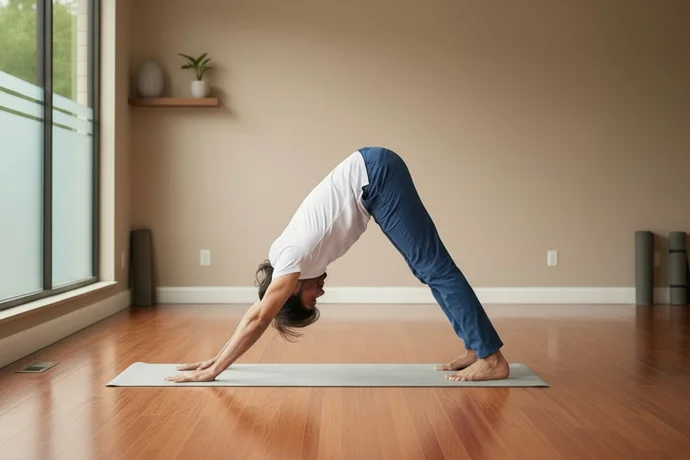
Three Steps to Crafting Your Powerful Sankalpa
Finding your true Sankalpa requires quiet reflection. It shouldn’t be about surface-level desires, but about your deepest, most authentic need for growth right now.
Step 1: Find Your Deepest Need
Ask yourself: What is the one quality I need to cultivate to feel whole, complete, and balanced?
· If you feel scattered, your need might be Focus.
· If you feel anxious, your need might be Calm.
· If you feel stagnant, your need might be Courage.
Step 2: Affirm in the Present Tense
Once you have the quality, form a short, powerful sentence that affirms this quality is already yours. It must be brief enough to memorise easily.
· “I am calm and present.”
· “I live with abundant energy and joy.”
· “I trust the timing of my life.”
Step 3: Practice Integration
The Sankalpa is traditionally practised during deep states of rest, such as at the beginning and end of meditation, or during the deepest part of Yoga Nidra (yogic sleep).
Why this timing? When the mind is relaxed and quiet, the subconscious is more receptive. Planting your powerful affirmation into a peaceful, receptive mind allows it to take root deep below your surface thoughts, ensuring it guides your actions throughout the year.
This New Year, forget the struggle. Instead of battling your shortcomings, affirm your highest potential. Watch how much easier it is to live into the person you already know you are.

